Plant atlas Short
Langsat Seed Limonoids Fought Malaria Parasites, in the Lab
Longkong / Langsat · ลองกอง · Lansium parasiticum
Longkong / Langsat — ลองกอง (long-kong) — Lansium parasiticum.
Langsat — long-kong. You spit out its bitter seeds, but their limonoid compounds showed antimalarial activity in early test-tube studies. To eat langsat, peel the tan skin and enjoy the sweet, translucent flesh, spitting out the bitter seeds. A 2022 review reports antioxidant compounds in the fruit, which also brings fiber and copper. Fiber keeps digestion regular, helps you feel full, and slows how fast sugar is absorbed. Copper helps your body put iron to work, supports normal energy metabolism, and builds healthy connective tissue and nerves. Yam Langsat tosses the peeled fruit segments with crispy fried fish, shallots, and a fiery chili-lime dressing. Langsat Loi Kaew steeps the deseeded fruit in a fragrant jasmine syrup, served ice-cold over crushed ice. Longkong is just a thin-skinned, near-seedless langsat, the same species bred sweeter with almost no seed to spit out.
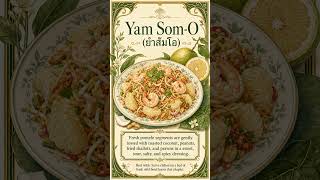
Yam Longkong — ยำลองกอง (yam-long-kong)
Longkong Loy Kaeo — ลองกองลอยแก้ว (long-kong-loy-kaew)
Food and nutrients
Rich in: fiber, copper
Research context
Langsat is studied for antioxidant compounds and (in lab) antimalarial limonoids — Nutrients, 2022 (review, preclinical)
Sources
Source: Abdallah HM et al. (2022). Lansium domesticum—A Fruit with Multi-Benefits: Traditional Uses, Phytochemicals, Nutritional Value, and Bioactivities. Nutrients 14(7):1531. DOI:10.3390/nu14071531 (PMID 35406144)
Narration transcript
Opening
Peel the tan skin and inside sit translucent segments like a tiny frosted tangerine, sweet and grape-like, wrapped around one or two intensely bitter seeds you spit out. Langsat — ลางสาด, laang-saat. You eat that clear, juicy flesh in segments.
Yam Longkong (ยำลองกอง)
Yam longkong is a tangy Thai salad that tosses the peeled fruit segments with crispy fried fish, shallots, and a chili-lime dressing, served over jasmine rice.
Longkong Loy Kaeo (ลองกองลอยแก้ว)
Longkong loy kaeo is a chilled dessert that steeps deseeded fruit segments in a light jasmine syrup, served ice-cold over crushed ice.
Nutrition summary
Those frosted little segments are surprisingly high in vitamin C, backed by a bit of thiamin and iron.
Fiber
Fiber adds bulk to meals and can help with fullness.
Copper
Copper helps your body use iron and maintain normal connective tissue.
Closing
Longkong is the same tree bred sweeter, with skin that peels clean and almost no seed left to spit. Do not chew the bitter seeds, though; they are packed with harsh compounds the plant uses to defend the fruit. Follow Longevity Biome, and LIKE this video for regular updates.
Related playlists
Keep watching