Plant atlas Short
Bottle Gourd: Why You Taste a Raw Sliver First
Bottle Gourd (Calabash) · น้ำเต้า · Lagenaria siceraria
Bottle Gourd (Calabash) — น้ำเต้า (nam-tao) — Lagenaria siceraria.
Pick it young and the pale flesh is watery and mild, almost flavorless until it drinks up the broth it simmers in. Leave that same fruit on the vine and its shell hardens into a woody calabash you can carve into a dipper. Harvested tender, it brings vitamin C, potassium and fiber for very few calories. The part you eat is the young, immature fruit, and in some kitchens the young leaves and shoots go in the pot too.
Always taste bottle gourd raw before you cook it: one bitter sliver means you throw the whole fruit out. That bitterness means cucurbitacins, plant toxins that have sent people to hospital with violent vomiting. A mild, non-bitter fruit does not carry that warning. It is a light, watery vegetable that drinks up a good broth.
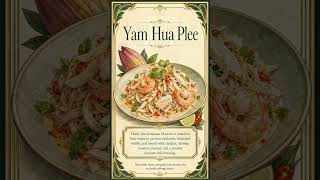
Gaeng Jued Nam Tao — แกงจืดน้ำเต้า (gaeng-jued-nam-tao)
Nam Tao Pad Kai — น้ำเต้าผัดไข่ (nam-tao-pad-kai)
Food and nutrients
Rich in: Vitamin C, fiber, potassium
Research context
In mice and in-vitro tests, bottle gourd fruit extract showed antioxidant and liver-protective effects — Frontiers in Nutrition, 2022
Sources
Source: Lagenaria siceraria fruit: a review of its phytochemistry, pharmacology, and promising traditional uses. Frontiers in Nutrition, 2022 (PMID:36185670). Bitter-fruit cucurbitacin toxicity: J Clin Diagn Res 2014; PMID:25653981.
Narration transcript
Opening
Thai bottle gourd — น้ำเต้า, nam-tao. Pick it young and the pale flesh is watery and mild, almost flavorless until it drinks up the broth it simmers in. Leave that same fruit on the vine and its shell hardens into a woody calabash you can carve into a dipper. Harvested tender, it brings vitamin C, potassium and fiber for very few calories. The part you eat is the young, immature fruit, and in some kitchens the young leaves and shoots go in the pot too.
Gaeng Jued Nam Tao (แกงจืดน้ำเต้า)
In gaeng jued nam tao, cubed young bottle gourd simmers in a clear broth with tofu and minced pork until it turns soft and drinks up the stock. Serve it over jasmine rice.
Nam Tao Pad Kai (น้ำเต้าผัดไข่)
For nam tao pad kai, thin slices of young bottle gourd get stir-fried with garlic, then bound with beaten egg. Eat it with rice as a quick, light dish.
Nutrition summary
Bottle gourd is a light, watery vegetable, so its numbers are modest — a little vitamin C and a trace of zinc.
Vitamin C
Vitamin C is used to build collagen and helps protect cells from oxidative stress.
Fiber
Fiber adds bulk to meals and can help with fullness.
Potassium
Potassium helps with normal fluid balance and muscle function.
Closing
Always taste bottle gourd raw before you cook it: one bitter sliver means you throw the whole fruit out. That bitterness means cucurbitacins, plant toxins that have sent people to hospital with violent vomiting. The ordinary, mild fruit is perfectly safe. Grow it up a strong trellis, since the vine is a vigorous climber with white flowers that open at night, and pick the gourds young, while the skin still dents under a fingernail. Follow Longevity Biome, and LIKE this video for regular updates.
Related playlists
Keep watching