Plant atlas Short
Wood Ear Mushroom: The Crunchy Cap in Yam Woon Sen
Wood Ear Mushroom · เห็ดหูหนู · Auricularia auricula-judae
Wood Ear Mushroom — เห็ดหูหนู (het-hoo-noo) — Auricularia auricula-judae.
Dried, it looks like a shriveled black chip, but drop it in water and it swells into a floppy, ear-shaped cap with a bite that snaps crisp then goes soft. Thai cooks shred it into yam het hu nu, the spicy wood-ear salad, and into glass-noodle yam woon sen for that crunch. It's one of the most fiber-rich mushrooms around, with iron, potassium, calcium, and magnesium. The part on your plate is the whole rehydrated cap.
Wood ear is all about texture — a dried black chip that swells into a floppy, crunchy cap, slipped into soups and stir-fries. Lab and rat studies found that concentrated wood-ear extracts affected platelet clumping, but the eaten mushroom has not been tested for that effect in people. If you take blood thinners or aspirin and eat it often, mention it to your doctor.
Yam Het Hu Nu — ยำเห็ดหูหนู (yam-het-hoo-noo)
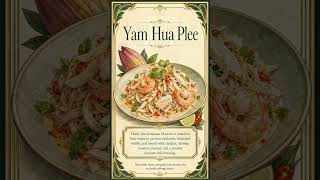
Yam Woon Sen — ยำวุ้นเส้น (yam-woon-sen)
Food and nutrients
Rich in: fiber, iron, potassium, calcium, magnesium
Research context
In lab and rat tests, wood ear extract may slow platelet clumping; the eaten mushroom's benefit is untested in people — Nutrients, 2019
Sources
Source: Nutrients 2019;11(12):3040, in vitro anti-platelet screening of edible mushrooms (PMID 31842490, DOI:10.3390/nu11123040). Anticoagulant polysaccharide, antithrombin mechanism and reduced platelet aggregation in rats: Thrombosis Research 2003;112(3):151-158 (PMID 14967412, DOI:10.1016/j.thromres.2003.10.022). Composition: Journal of Food and Nutrition Research 2015;3(8):474-480.
Narration transcript
Opening
That black, crinkled ruffle in your glass-noodle salad is a fungus — wood ear grows in ear-shaped frills on dead wood. Wood ear — เห็ดหูหนู, het-hoo-noo. Dried, it's a shriveled black chip; drop it in water and it swells into a floppy, ear-shaped cap that snaps crisp then softens. You eat the whole rehydrated cap, always cooked, shredded into yam woon sen glass-noodle salad for the crunch.
Yam Het Hu Nu (ยำเห็ดหูหนู)
Thai cooks blanch the rehydrated caps and toss them with lime, fish sauce, chili and shallots into yam het hu nu, a spicy salad that keeps its crunch. Eat it with sticky rice.
Yam Woon Sen (ยำวุ้นเส้น)
Shredded wood ear goes into yam woon sen, the glass-noodle salad, where it adds crunch against the soft noodles alongside pork or shrimp, lime and chili.
Nutrition summary
Dried and weight for weight, wood ear is remarkably high in fiber, manganese, and selenium, plus plenty of riboflavin.
Fiber
Fiber adds bulk to meals and can help with fullness.
Iron
Iron is part of hemoglobin, the protein that carries oxygen in your blood, and it supports normal energy metabolism.
Potassium
Potassium helps with normal fluid balance and muscle function.
Calcium
Calcium is needed to maintain normal bones and teeth, supports normal muscle and nerve function, and contributes to normal blood clotting.
Magnesium
Magnesium supports normal muscle and nerve function, contributes to normal energy metabolism, and helps maintain healthy bones.
Closing
Wood ear is all about texture — a dried black chip that blooms into a crunchy, ear-shaped cap for soups and stir-fries. One note if you take blood thinners or aspirin: wood ear can make your blood a little slower to clot, so if you eat it often, mention it to your doctor. Follow Longevity Biome, and LIKE this video for regular updates.
Related playlists
Keep watching